
Nothing About Me Without Me: How to Build Patient Safety From the Frontline Up

World Patient Safety Day puts a specific spotlight on health workers this year, calling on the industry to help them strengthen patient safety culture and practices. In recognition of the day, Sentact is launching the “Patient Safety Expert Spotlight,” a new series of conversations with the people building safer care, one unit at a time….
Closed-Loop Response as the Foundation of Trust in Safety Systems

Closing the loop on a safety concern is one of the clearest ways a hospital can show staff that speaking up actually matters. Yet while hospitals have invested heavily in making it easier for employees to raise concerns, many safety systems are still better at capturing those concerns than ensuring they’re acted on, resolved, and…
How to Encourage Near Miss Reporting in Hospitals

Near miss reporting is vital in hospitals because it helps identify potential hazards before they become serious safety events. By encouraging staff to report and analyze near misses, hospitals and health systems can reduce risk, strengthen safe practices, and build a culture where patient safety is continuously prioritized. What Is a Near Miss? A near…
7 Clinical Outcome Metrics for Multi-Hospital Systems
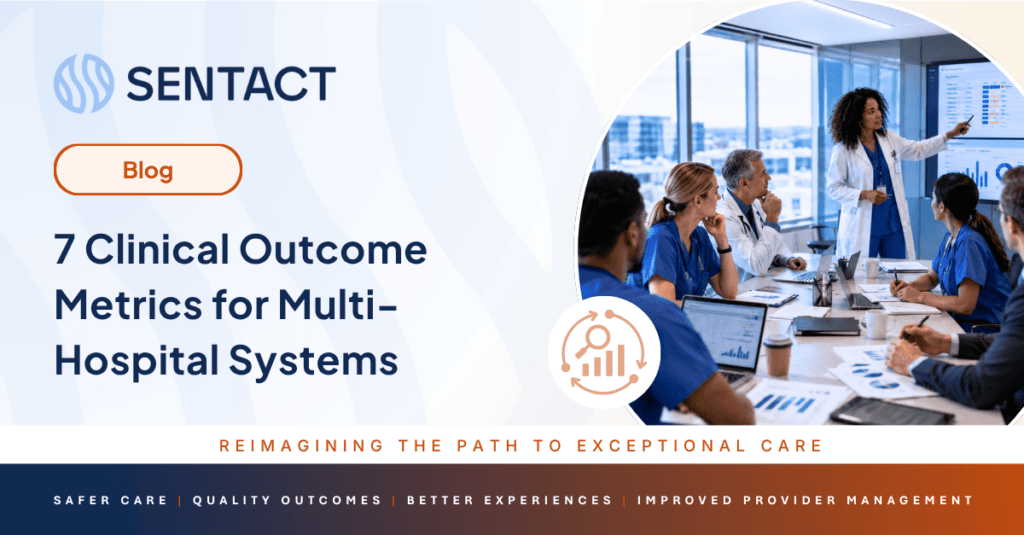
Clinical outcomes monitoring gets exponentially harder when one hospital becomes five, ten, or fifty. A health system may know exactly how many facilities it operates but ask for its system-wide 30-day readmission rate — measured the same way at every hospital — and the answer can quickly become complicated. That challenge matters more than ever….
Patient Trust in Healthcare: The Beryl Institute Video with CommonSpirit Health

Patient trust is shaped by what happens in the moments between formal surveys, rounding conversations, and organizational initiatives. When leaders and frontline teams can recognize concerns, understand what patients and caregivers are experiencing, and act on that insight in real time, patient experience becomes more than a measurement; it becomes an opportunity to improve how…
Operationalizing Safety Through Effective Huddles
Tiered safety huddles are one of the most effective answers. When designed well, they create a predictable cadence for identifying risks, escalating barriers, and connecting frontline insights to leadership action. The evidence supporting this approach is substantial. A systematic review of 158 healthcare huddle studies found consistent improvements across communication, situational awareness, safety culture, and…
Huddle Smarter: The Case for Automating Patient Safety’s Most Powerful Workflow
Safety huddles are one of the most evidence-backed practices in modern healthcare. Borrowed from high-reliability industries like aviation and nuclear power, they have been widely adopted across healthcare organizations as a mechanism for surfacing risk, aligning teams, and preventing adverse events before they occur. The evidence supporting them is compelling. Studies link regular safety huddles…
Building a Risk Management Framework for AI in Healthcare

Artificial intelligence (AI) is rapidly transforming healthcare, creating new opportunities to improve clinical decision-making, optimize operations, and enhance patient care. At the same time, AI introduces complex risks related to governance, patient safety, data integrity, bias, regulatory compliance, and organizational accountability. As healthcare organizations expand their use of AI, effectively managing these emerging risks has…
10 Elements of a Just Patient Safety Culture

Patient safety culture is the foundation of high-quality healthcare, requiring every member of an organization to work together to prevent harm and continuously improve care. While healthcare organizations have made significant progress in reducing preventable adverse events, sustaining those improvements depends on more than policies and procedures—it requires a strong culture where safety is prioritized,…
Embracing Empathy: The Critical Role of Kindness in Improving Patient Care

Kindness in healthcare is a powerful driver of patient-centered care, shaping the experiences of patients, families, and healthcare professionals alike. While healthcare organizations continue to navigate increasing operational pressures, fostering a culture of kindness can strengthen communication, improve trust, enhance employee wellbeing, and contribute to better patient outcomes. More than a compassionate gesture, kindness is…