
Patient Trust in Healthcare: The Beryl Institute Video with CommonSpirit Health

Patient trust is shaped by what happens in the moments between formal surveys, rounding conversations, and organizational initiatives. When leaders and frontline teams can recognize concerns, understand what patients and caregivers are experiencing, and act on that insight in real time, patient experience becomes more than a measurement; it becomes an opportunity to improve how…
8 Reasons Hospital Rounding Breaks Down at Scale
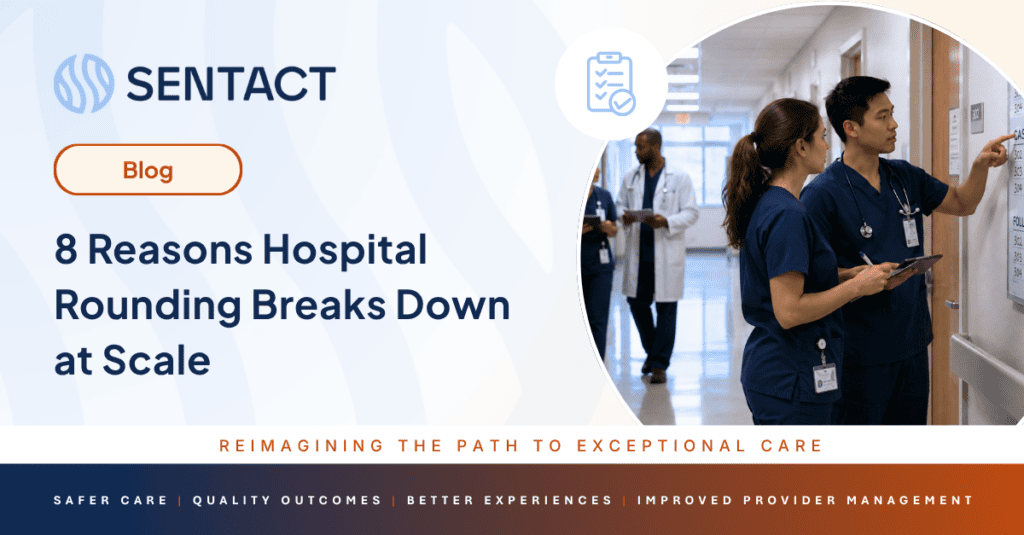
Nurse rounding workflows are one of the simplest ideas in healthcare: check on every patient, on a set schedule, every time. They’re also one of the hardest things to keep consistent once an organization grows past a single unit. A pilot unit can make rounding work through sheer discipline. A charge nurse who cares, a…
The End of the Rehearsed Survey – And Why That’s A Good Thing

By: Chris Dube | President, Sentact CMS’ accreditation overhaul closes the curtain on survey-week theater. The hospitals that thrive under it will be the ones whose ordinary Tuesday is their best evidence. On June 12, 2026, the Centers for Medicare & Medicaid Services finalized a rule aimed squarely at the watchers themselves. Announcing the Strengthening…
Executive POV: High Reliability Needs More Than a Culture Change — It Needs Scaffolding

By: Nicholas Testa, MD | Chief Clinical Officer, Sentact I want to start with a definition, because I think it matters more than most people realize. When I talk with healthcare leaders about improving their organizations, I always come back to one fundamental question: what is healthcare, exactly? To improve something, you first must define…
Protecting Healthcare Worker’s Health & Wellbeing
The COVID-19 pandemic has had a profound impact on health systems, and particularly on the health and wellbeing of healthcare workers on the frontlines of pandemic response efforts. (1) However, it’s not just during a pandemic that organizations need to focus on their employee’s health and wellbeing. Healthcare workers have historically faced high levels of burnout and…
7 Reasons for Healthcare Leaders to Focus on Patient Experience

Prioritizing patient experience is vital for enhancing outcomes and offers multifaceted benefits for healthcare institutions. This strategic focus not only improves patient care but also bolsters operational efficiency. Explore the seven key reasons why healthcare leaders must prioritize patient experience for transformative impact. 1. Improved Patient Outcomes At the core of every healthcare organization lies the central…
9 Tips for Performing an Effective Root Cause Analysis in Healthcare

Root cause analysis in healthcare is a systematic approach to identifying the underlying causes of problems, medical errors, or adverse events. This strategy is widely utilized to understand what happened, why it happened, and how to prevent it from happening again. As a crucial tool for quality improvement in healthcare, it helps to address gaps in…
How Safety Culture Translates to Better Patient Outcomes

One misstep. One missed detail. In healthcare, that’s all it takes to turn a routine procedure into a life-threatening crisis. But behind every safe patient discharge, every prevented error, and every confident caregiver is something less visible, but just as critical: a strong safety culture. It’s the invisible force that drives better communication, faster response…
Medication Errors: Why We Must Look Beyond the “Five Rights”
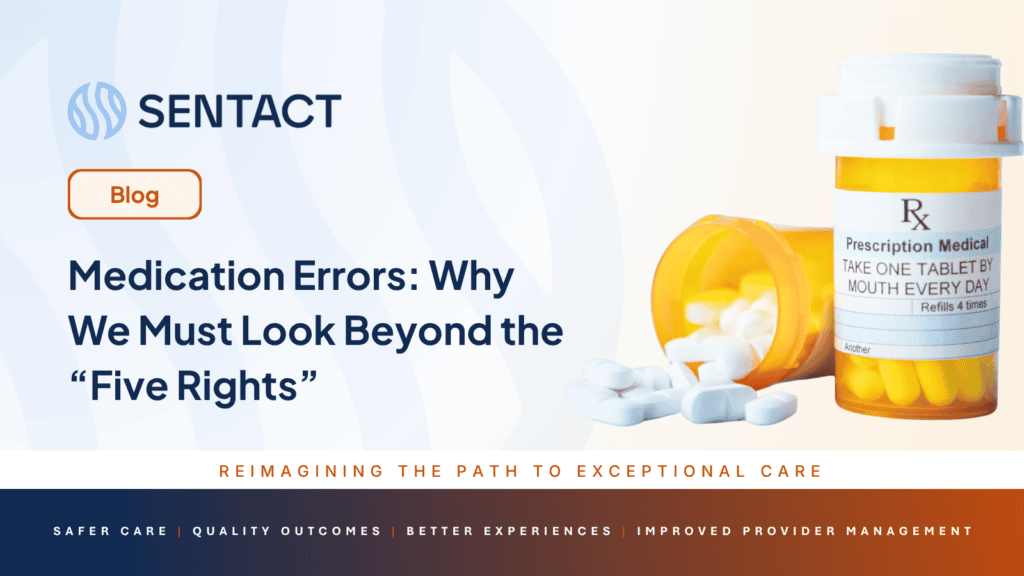
Medication errors are a widespread concern in healthcare, and they can have severe consequences for patients. The five rights of medication administration – right patient, right drug, right dose, right rout, and right time –have long been used as a framework for preventing medication errors. However, relying solely on the five rights is not enough…
Near Miss Reporting Software in Healthcare: A Critical Safety Tool

Near miss reporting software has become an indispensable tool in healthcare, where the complexity of modern medicine makes errors and near misses almost inevitable. What sets high-performing hospitals, clinics, and other types of organizations apart is how they respond to these events—especially the ones that almost happened. By capturing potential hazards before they escalate into adverse events, near miss…